




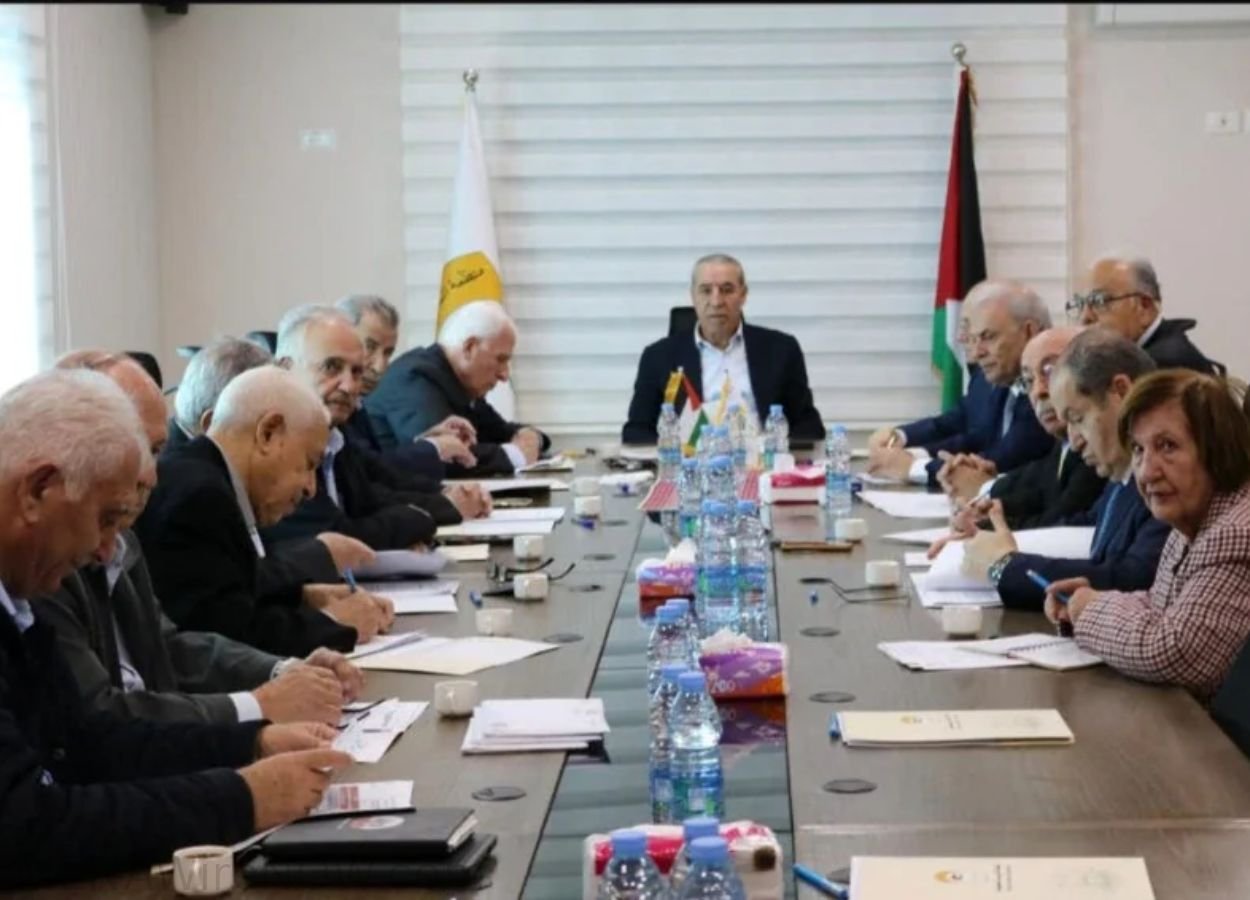
RAMALLAH — The Executive Committee of the Palestine Liberation Organization (PLO) has reaffirmed that general Palestinian presidential and legislative polls are slated for 2027 across the Gaza Strip and the West Bank, including occupied East Jerusalem, while noting the vote could be brought forward if prevailing political and logistical obstacles are resolved. Issued following a Sunday leadership session in Ramallah addressing escalating field developments, the communique comes roughly a month after President Mahmoud Abbas issued a decree postponing the legislative ballot to September 11, 2027.
At the core of its political platform, the committee reiterated that terminating the Israeli occupation and establishing an independent, sovereign Palestinian state along the June 4, 1967 borders—with East Jerusalem as its capital—remains the supreme national priority. Leadership members affirmed the inalienable right to self-determination and advocated for a just, mutually agreed resolution to the refugee question grounded in UN General Assembly Resolution 194. The body pressed the international community, particularly the UN Security Council, to enact concrete, time-bound mechanisms enforcing Security Council Resolution 2334, alongside fulfilling New York Declaration commitments, expanding bilateral state recognition, and backing full United Nations membership.
Addressing conditions in Gaza, the PLO body demanded the strict preservation of the ceasefire, an immediate halt to Israeli violations, civilian protection, the reopening of border crossings, and unimpeded humanitarian aid delivery. It urged swift advancement into the second phase of the framework outlined under Security Council Resolution 2803—facilitating a full Israeli military withdrawal, the restoration of governing authority to State of Palestine institutions, and comprehensive reconstruction. Rejecting forced displacement or territorial fragmentation, the committee stressed that Gaza constitutes an integral part of Palestinian territory whose institutional unity with the West Bank must anchor any postwar governance.
In parallel, the leadership rejected any attempts to curtail the mandate, transfer the responsibilities, or downsize the workforce of the UN Relief and Works Agency for Palestine Refugees (UNRWA), urging international donors to guarantee sustainable funding while demanding Israel lift operational curbs. Regarding the occupied West Bank and East Jerusalem, the committee warned against accelerating settlement expansion and annexation schemes, calling for international civilian protection, safeguards for the historical status of holy sites in Jerusalem and Hebron, and the prompt release of withheld Palestinian tax clearance revenues.
Looking toward external diplomatic engagement, the committee stated that its posture toward any incoming Israeli government will be judged strictly by concrete actions—including halting settlement activity and settler violence, complying with Resolutions 2803 and 2334, and pursuing genuine peace negotiations. It further urged Washington to leverage its diplomatic influence to curb unilateral Israeli policies and support US recognition of Palestinian statehood. Internally, the committee called for sustained national dialogue among all factions under the PLO’s political program, emphasizing institutional unification around the foundational principles of one state, one law, and one legitimate armed force.


No Comment! Be the first one.