






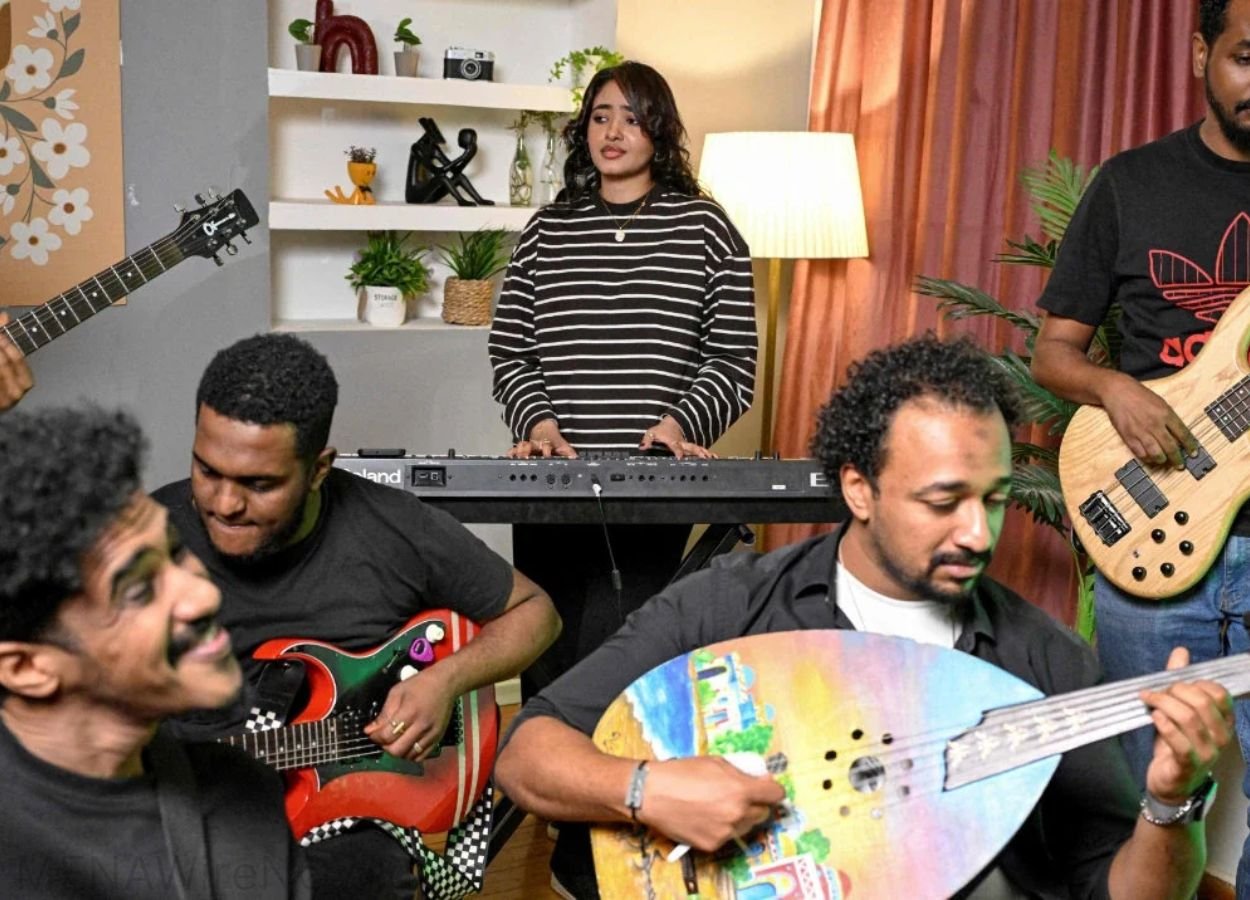
CAIRO — Displaced across continents by Sudan’s devastating civil conflict, members of the celebrated Khartoum ensemble Aswat Al-Madina (Voices of the City) have reunited in Cairo, resuming live concerts and studio recording sessions after years of forced separation. For guitarist and co-founder Mohamed Al-Mustafa, known professionally as Timon, gathering once more inside an Egyptian recording studio feels surreal—a poignant contrast to the street demonstrations in Khartoum where the group once performed for thousands demanding democratic rule before hostilities tore their homeland apart.
Established in the Sudanese capital in 2014, Aswat Al-Madina pioneered an underground musical movement fusing traditional folk melodies with jazz, reggae, and modern rhythms to critique corruption and authoritarian governance. Lead vocalist Ibrahim Ahmed Taha, who endured multiple detentions over the group’s lyrics prior to the uprising, noted that the band initially relied on coded metaphors understood implicitly by listeners yet difficult for authorities to prosecute. When nationwide youth protests erupted in December 2018 against longtime ruler Omar Al-Bashir, their tracks quickly became an indispensable revolutionary soundtrack—blaring from car stereos, mobile phones, and giant speakers carried through street barricades.
The ensemble frequently performed at the mass sit-in outside military headquarters in Khartoum, a hub of evening poetry and political speeches until security forces led by the military and the paramilitary Rapid Support Forces (RSF) violently dispersed the camp in June 2019, killing at least 120 demonstrators. Four years later, when those same rival commanders plunged Sudan into full-scale war in April 2023—just two days after the musicians had met to plan an upcoming setlist—the conflict claimed tens of thousands of lives, displaced millions, and obliterated the group’s creative livelihood.
As street battles engulfed Khartoum, the musicians fled with little more than backpacks and laptops, leaving behind a five-story artistic hub completely stripped of instruments, furniture, and years of work by looters. Timon sought refuge in the United Arab Emirates while bandmates scattered to Egypt and other African states, replacing regular rehearsals with anxious conversations over visas and relatives trapped in war zones.
Their long-awaited reunion materialized in Cairo this August, marking the band’s first live appearance since the outbreak of fighting. Drawing passionate Sudanese expatriates who sang every lyric and shouted song requests, the concerts offered brief emotional solace—with Taha remarking he felt momentarily transported back to Khartoum, and keyboardist Roba Bashir, the group’s sole female member, calling the gathering her happiest day since the conflict began. Attendees like Musab Mahgoub noted that the shows revived cherished memories of home.
Looking ahead, Aswat Al-Madina aims to embark on an international tour while recording an updated rendition of their song “Nos Kobayet Shai Bi’Aisha” (“Half a Cup of Tea with Bread”) alongside an Egyptian-Nubian artist, channeling themes of family and belonging into a cultural lifeline for Sudan’s diaspora.





No Comment! Be the first one.