




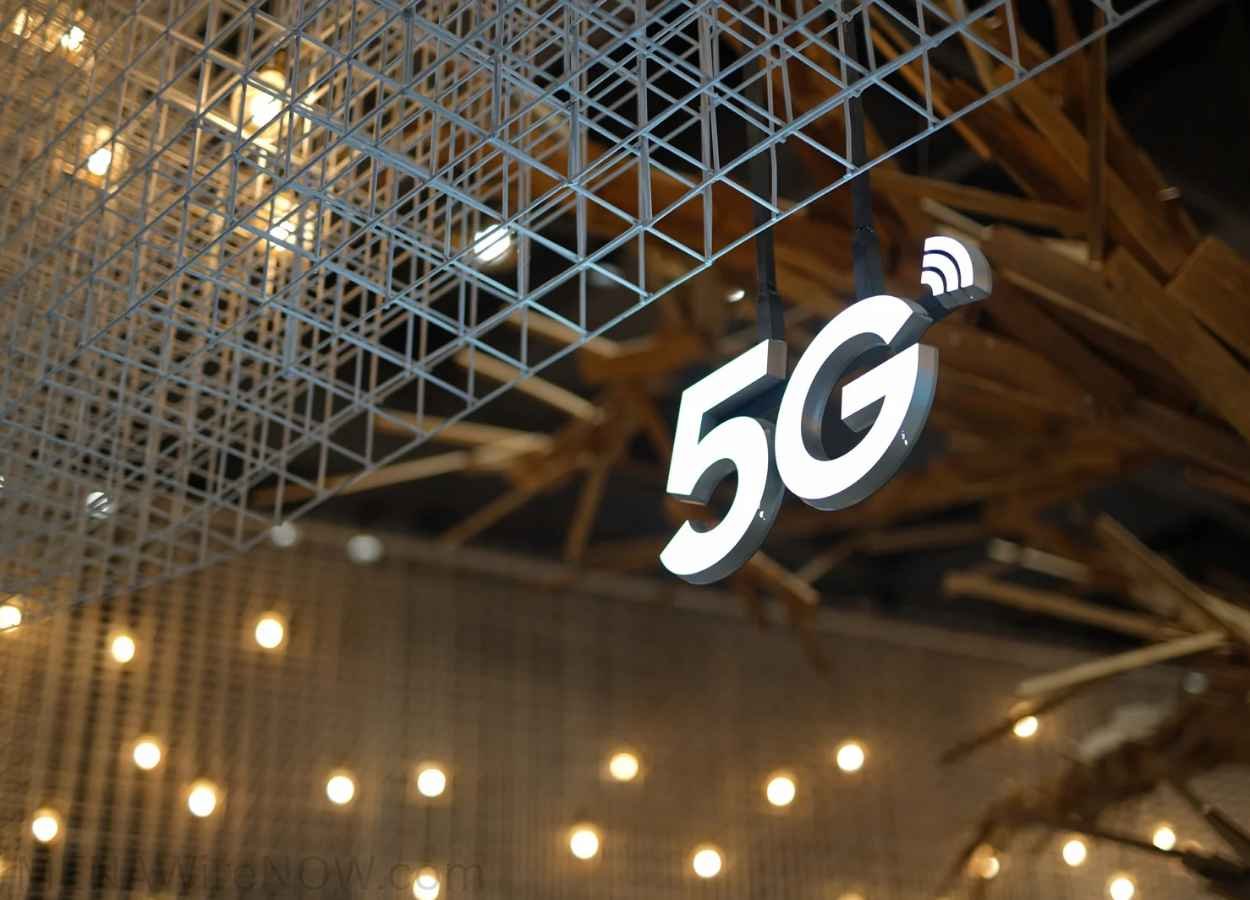
RIYADH — Telecom operators in Saudi Arabia are shifting toward specialized, performance-based connectivity services to unlock new revenue streams beyond conventional mobile data packages as 5G infrastructure matures across the Kingdom, according to Swedish telecommunications giant Ericsson.
Speaking in an interview with Arab News, Ante Mihovilovic, vice president and head of networks at Ericsson Europe, Middle East and Africa, noted that rapid 5G uptake, continuous network expansion, and rising Fixed Wireless Access adoption have positioned Saudi Arabia as a pivotal 5G market. Backed by sustained national investment in digital infrastructure under Vision 2030, operators are moving past volume-based data sales to serve targeted enterprise and consumer demands in sectors such as gaming, media, logistics, and industrial automation.
“The opportunity is to move from selling connectivity mainly by data volume toward services built around performance, reliability and specific network capabilities,” Mihovilovic stated, adding that global industry experience proves faster speeds alone do not guarantee fresh income unless paired with viable commercial models and customer-valued solutions.
Central to this commercial transition are 5G Standalone networks—which operate independently of legacy 4G systems—and network application programming interfaces (APIs) that allow developers and enterprises to tap into capabilities like location verification, authentication, and quality on demand. Looking ahead to 2027, Mihovilovic identified 5G Standalone and differentiated connectivity as primary growth engines for regional carriers, alongside continued returns from Fixed Wireless Access.
Artificial intelligence is simultaneously transforming how operators manage network loads. Mihovilovic highlighted the annual Hajj pilgrimage as a prime showcase, where AI-powered automation helps telecom providers handle massive spikes in mobile traffic and maintain seamless connectivity for millions of pilgrims. At the same time, surging consumer and enterprise adoption of AI-driven applications is creating reciprocal demand for higher-capacity, low-latency networks.
Recent milestones underscore the Kingdom’s momentum. In September, Ericsson and Saudi carrier stc group finalized a multi-year pact to broaden 5G coverage, deploy additional sites, and roll out 5G Standalone capabilities. Earlier during LEAP 2026, the Communications, Space and Technology Commission unveiled over SR550 million ($146.7 million) in ICT infrastructure investments aimed at advancing 5G and network sustainability, while Communications and Information Technology Minister Abdullah Al-Swaha met Ericsson CEO Borje Ekholm in April to explore deeper cooperation across cloud, AI, and automation.
Although Vision 2030 giga-projects like Neom draw international attention, Mihovilovic stressed that demand for advanced connectivity spans households, enterprises, and public institutions nationwide. Across the wider Gulf Cooperation Council, he expects operators to tailor technologies such as network slicing and programmable APIs to distinct national priorities—whether smart cities, tourism, or industrial diversification—as the region moves toward 2027.





No Comment! Be the first one.