





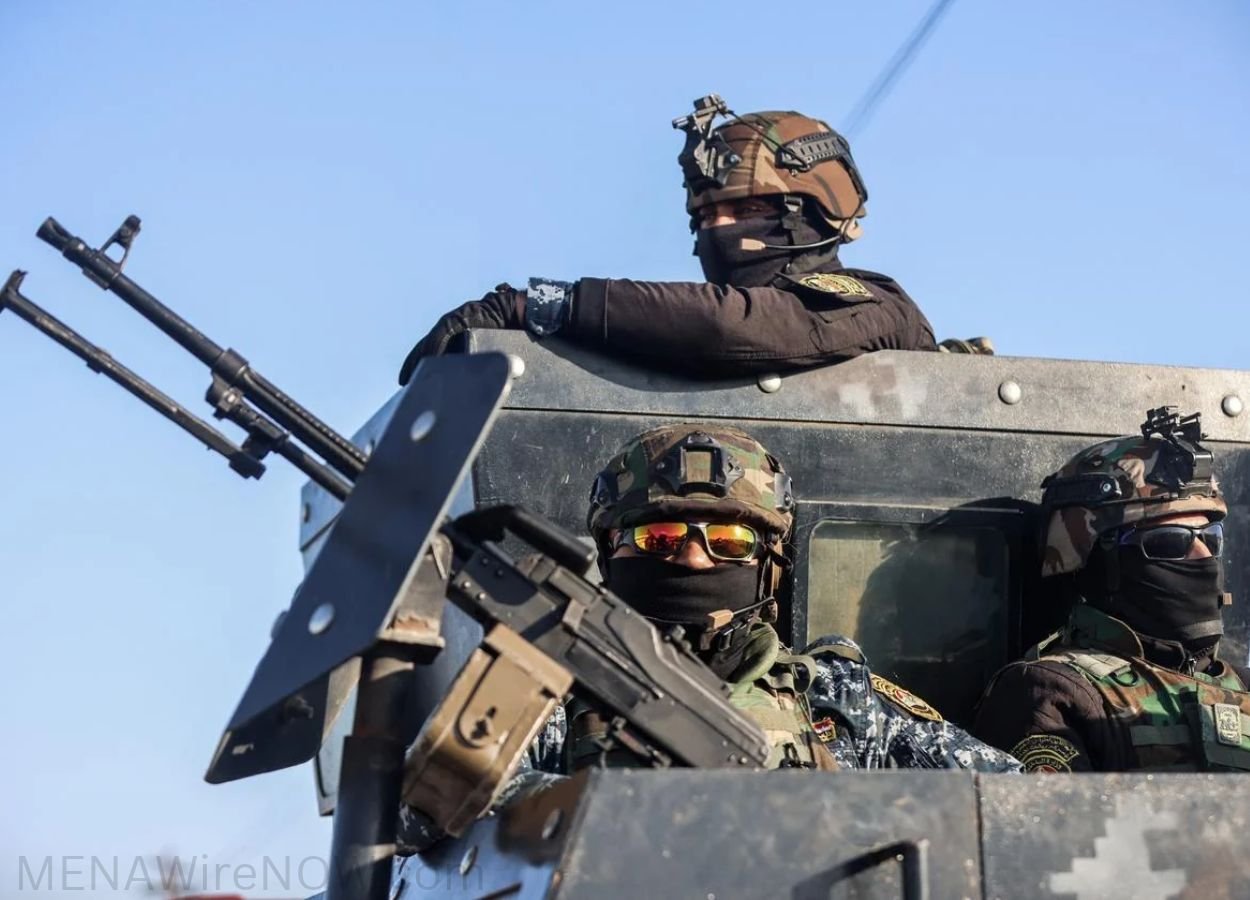
BAGHDAD — Iraqi security forces moved into Jurf al-Sakhar on Friday under a mediated arrangement aimed at curbing the footprint of Kataib Hezbollah without triggering an armed clash in Babil province.
The deployment comes days after Prime Minister Ali al-Zaidi ordered state forces to confront the Iran-backed faction over allegations that a smuggling network in the town—roughly 50 kilometers south of Baghdad—siphoned hundreds of millions of dollars worth of state oil. Mediated by Shiite political figures, the understanding anticipates Kataib Hezbollah fighters relocating elsewhere in Iraq while a security headquarters opens in the district on Saturday to manage the transition. Iraqi state media reported that energy police have already begun guarding an oil pipeline there, and nine senior oil and security officials have been removed following an inquiry into Babil.
Flag-draped government vehicles rolled toward Jurf al-Sakhar on Friday as troops took positions in the town center following a briefing by senior security officials pledging protection for the locality, while faction members remained near their own banners. Armed forces spokesperson Sabah al-Numan described the move at the briefing as a historic step demonstrating the military’s role in safeguarding national stability. Behind the scenes, Shiite political sources said Quds Force commander Esmail Qaani traveled to Baghdad on Monday to help ease friction between the government and the group, which has denied smuggling state crude.
Confronting Tehran-aligned armed groups carries steep political and security risks in Iraq, where factions expanded their influence after the 2003 invasion toppled Saddam Hussein. Five years ago, a similar crackdown ordered by a previous prime minister was followed by a drone strike on the premier’s Baghdad residence that officials labeled an assassination attempt. Meanwhile, US President Donald Trump has pressed al-Zaidi to disarm groups linked to Iran’s Revolutionary Guards that have claimed attacks against American personnel and installations in the United Arab Emirates and Saudi Arabia since the US-Israeli campaign against Iran began in late February.
Kataib Hezbollah, designated as a terrorist organization by Washington and active within the Islamic Resistance in Iraq, has refused to surrender its weapons to the state. Founded after 2003 and known for past attacks using snipers, rockets, mortars, and roadside bombs during counterinsurgency and sectarian fighting, the group possesses heavy weaponry including anti-tank guided missiles, armed drones, mortars, rockets, and short-range ballistic and cruise systems, alongside its Huquq political bloc with five seats and commercial interests ranging from construction and housing to currency exchange and trade, which it disputes. Its fighters also serve in battalions under the Popular Mobilization Forces, an official security umbrella created in 2014 to fight the Islamic State that receives state salaries yet frequently acts outside prime ministerial command. That tension surfaced again in August when Iraqi special forces detained Harakat al-Nujaba’s intelligence chief for 48 hours over alleged drone attacks on US targets and arrested four more members a week later, sparking retaliatory threats before senior Shiite politicians intervened.



No Comment! Be the first one.