






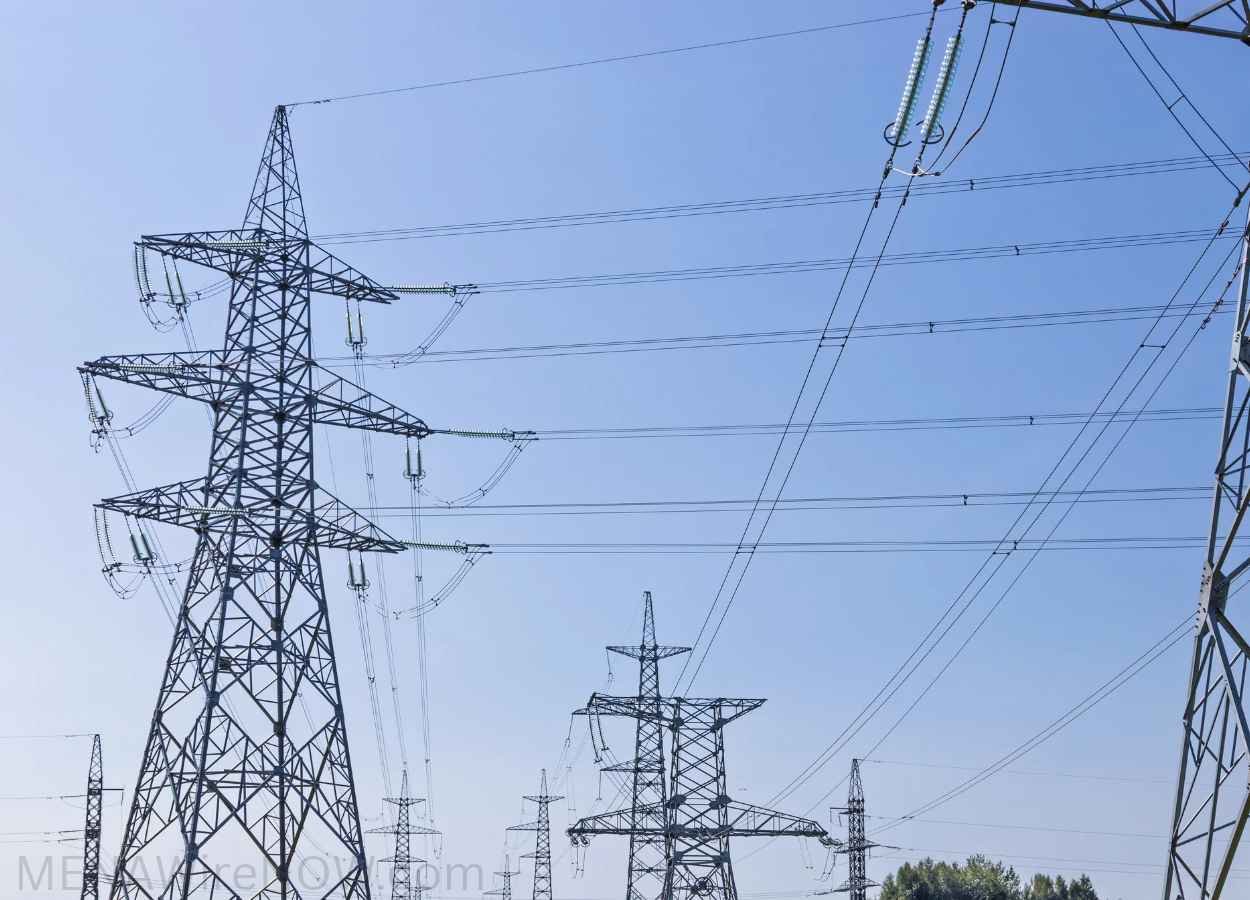
RIYADH — Researchers at King Abdullah University of Science and Technology (KAUST) are developing a specialized cooling coating for overhead power lines that could increase electricity transmission capacity by up to 18.3 percent during Riyadh’s extreme summer heat.
High ambient temperatures and heavy summer air-conditioning loads place intense thermal strain on Saudi Arabia’s power grid, forcing utilities to operate overhead cables within strict heat thresholds. By combining a silicone-based polymer with boron nitride particles, the new KAUST material reflects solar radiation, emits heat via infrared radiation, and conducts internally generated electrical heat outward to the cable surface. According to Qiaoqiang Gan, professor of materials science and applied physics at KAUST, enhancing existing conductors in this way could ease grid bottlenecks, lower material consumption, and delay costly infrastructure construction.
Unlike conventional radiative cooling films engineered mainly for building rooftops—where heat stems primarily from sunlight and surrounding air—power cables also generate significant internal warmth as current passes through them. Kai Xu, a postdoctoral fellow at KAUST, noted that intense summer weather limits a line’s ability to shed heat into the atmosphere, driving conductor temperatures higher. Elevated heat increases sagging, speeds up material wear, and restricts safe power delivery.
Saudi electrical engineer Nada Battyour pointed out that rising conductor temperatures elevate electrical resistance, resulting in higher transmission losses and accelerated thermal aging. Because overhead lines must stay below maximum allowable thermal limits, severe heat directly reduces their current-carrying capacity, or ampacity.
Modeling conducted by the KAUST team indicates that under peak summer conditions in Riyadh, coated conductors could carry up to 18.3 percent more current than standard insulated cables. In practical terms, this thermal headroom would give utilities extra capacity during hot summer afternoons when cooling demand surges across homes and businesses.
However, the scientists noted that verified annual energy savings and carbon emission reductions across a full-scale operating grid have not yet been quantified. Xu explained that overall savings depend on variables such as cable specifications, operating currents, line lengths, local climate patterns, and the broader electricity generation mix. Gan also cautioned that while conductor cooling strengthens grid resilience, it should complement rather than replace wider network upgrades as Saudi Arabia integrates more renewable energy onto its grid. For power utilities and consumers across the Kingdom, the research points toward a practical way to get more performance out of existing transmission corridors during peak summer demand.






No Comment! Be the first one.