





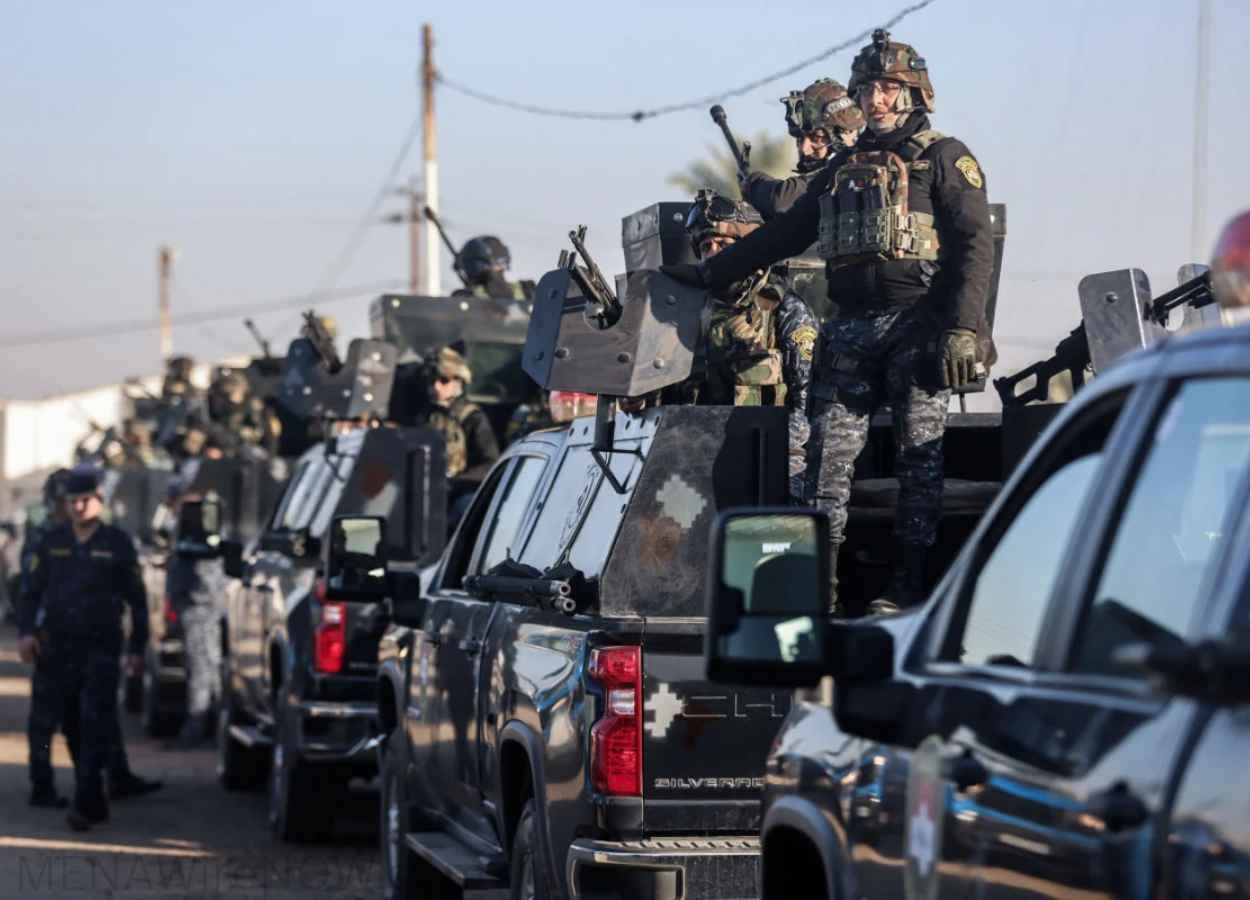
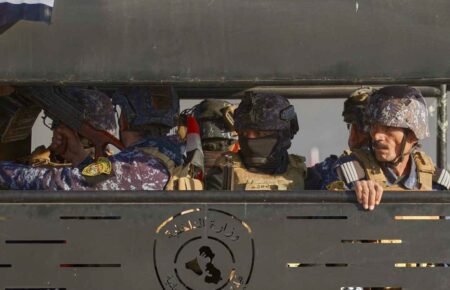
BAGHDAD — Iraqi security forces moved into Jurf Al-Sakher on Friday morning to assume control of local security and safeguard vital oil pipelines, averting an armed confrontation with Kataib Hezbollah after days of mounting tension in Babil province.
The deployment marks a major test of whether Baghdad can curb the reach of powerful Iran-backed factions without igniting wider domestic instability. Just one day earlier, an armed clash appeared imminent as federal troops massed outside the district ahead of a Friday evacuation deadline issued by Prime Minister Ali Al-Zaidi’s government, which has accused the militia of running an industrial-scale oil theft and smuggling operation. On Thursday, a senior Kataib Hezbollah commander had flatly refused to vacate the stronghold, denouncing Al-Zaidi as an adventurer stoking division and warning that Iraq stood on the brink of a severe crisis.
By Friday morning, however, state units began taking over security duties across the area without reported fighting. Elements of Iraq’s paramilitary Energy Police entered the town to secure energy facilities and pipelines. Energy Police commander Lt. Gen. Hamid Al-Husseini stated that his forces had started patrolling the 441-kilometer stretch of Iraq’s 9,000-kilometer oil pipeline network running through the region, coordinating alongside army units to establish security checkpoints every 500 meters.
Situated in Babil province and also referred to as Jurf Al-Nasr, the predominantly Sunni town was retaken from Daesh in 2014 during joint operations involving Iraqi troops and Shiite paramilitary factions, including Kataib Hezbollah. Much of the town was devastated during those battles, leaving tens of thousands of its roughly 80,000 residents displaced and unable to return home for more than a decade.
Alongside securing energy infrastructure, authorities signaled plans to reopen the district to civilian life. Lt. Gen. Al-Husseini announced that reconstruction teams would begin repairing war-damaged infrastructure so displaced families can eventually go back to Jurf Al-Sakher. He added that support crews have already started rehabilitating the main highway linking Jurf Al-Nasr to the holy city of Karbala ahead of reopening the route to public traffic. For displaced residents and Iraq’s energy sector, Friday’s peaceful transition offers a rare opening to restore state oversight, halt illicit fuel diversion, and revive long-abandoned communities.



No Comment! Be the first one.