






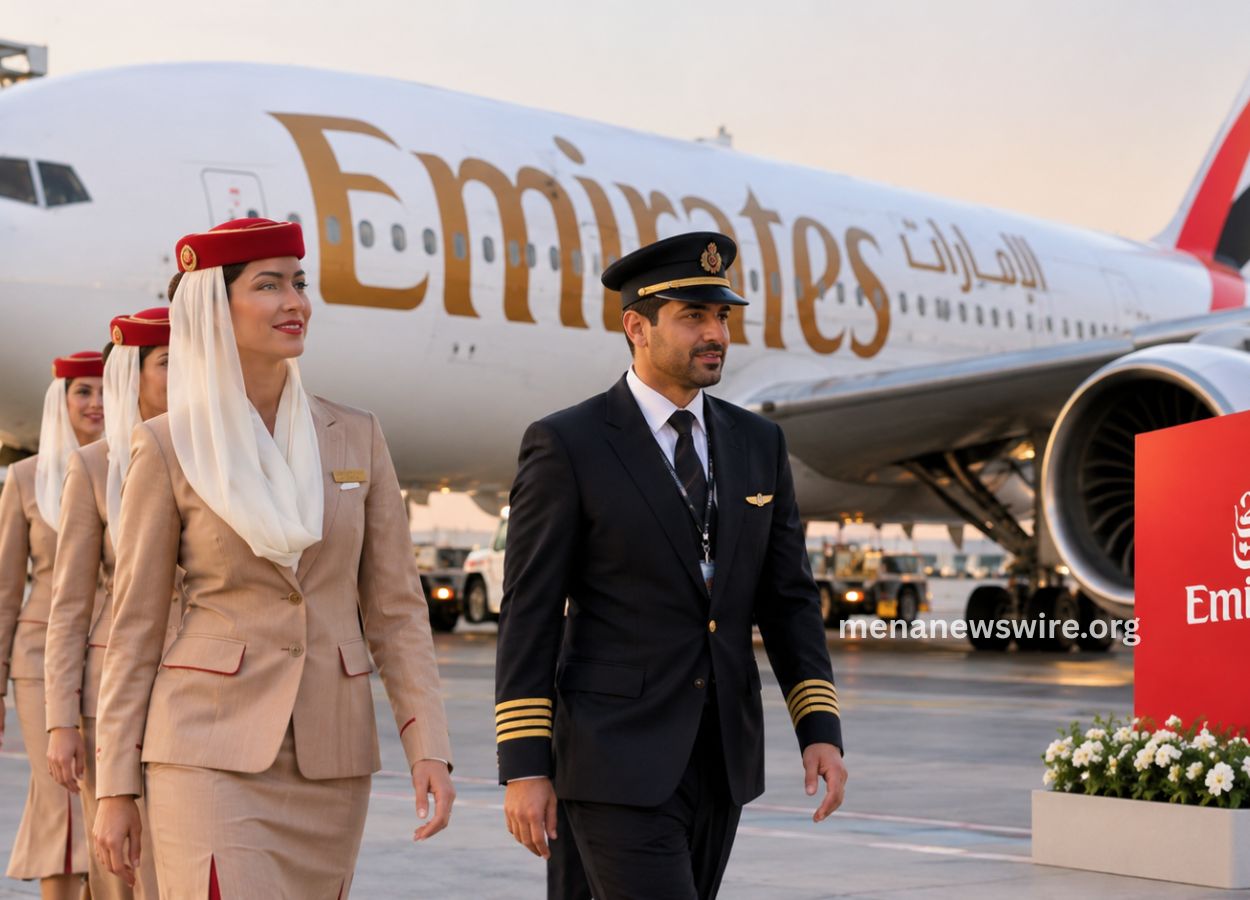
DUBAI — Dubai state-owned aviation enterprise Emirates Group recorded a pre-tax profit of AED 4.1 billion ($1.1 billion) for the first half of the 2026–27 financial year, maintaining profitability despite significant operational headwinds caused by regional military conflicts and elevated global fuel prices.
According to its half-year earnings report published Thursday, group revenue stood at AED 66.2 billion (18.0billion),representinga12percentdeclinecomparedtotherecordAED75.4billion(20.6 billion) posted during the same period last year. Profit after tax dropped 66 percent to AED 3.6 billion ($1.0 billion), reflecting the financial toll of temporary airspace closures, longer rerouting flight corridors, and a doubling of jet fuel market prices over the past year.
The group sustained its balance sheet by leveraging elevated passenger yields across intact premium routes alongside a 52 percent revenue surge in its air freight division, Emirates SkyCargo, which absorbed diverted trade flows amidst maritime supply chain disruptions. By the end of September, Emirates Airline had restored 91 percent of its global network, operating services across 150 airports in 78 countries and territories. Concurrently, airport and travel services subsidiary dnata posted a pre-tax profit of AED 410 million, supported by sustained international ground-handling operations.
Emirates Group Chairman and Chief Executive Sheikh Ahmed bin Saeed Al Maktoum praised the company’s business model and recognized the UAE government’s coordination in safely restoring commercial air transport through the region. Maintaining a strong cash position of AED 54.1 billion ($14.7 billion), the group confirmed it would continue its fleet expansion programs and long-term capital investments heading into the second half of the fiscal year.





No Comment! Be the first one.