






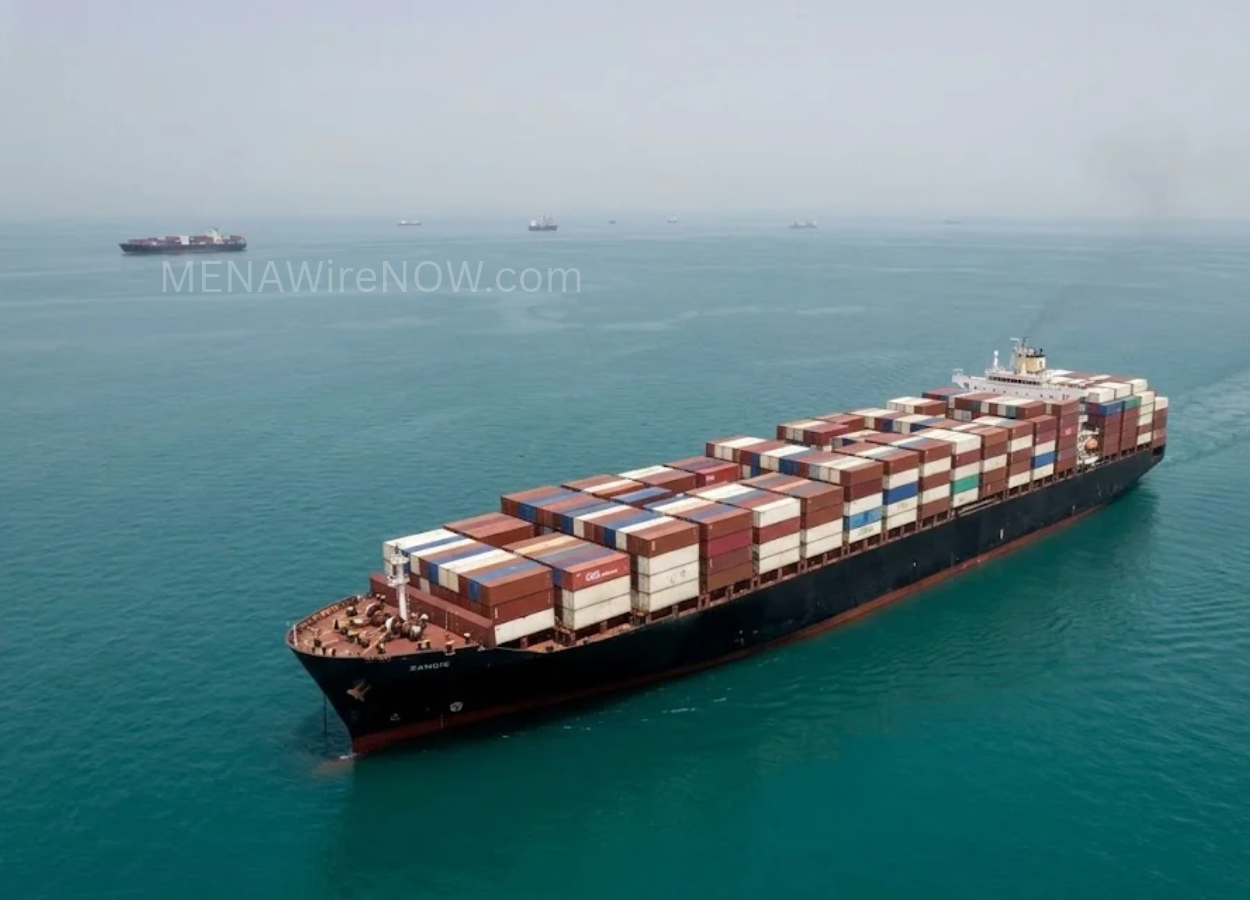
In an address to the 22nd International Institute for Strategic Studies Manama Dialogue, the Saudi Arabian Armed Forces Deputy Chief of General Staff, Vice Adm. Fahad Al-Ghufaili has warned not to use critical chokepoints of the world as a means of geostrategic coercion or intimidation. According to him, the free flow of international commerce and energy is highly dependent on multilateral stability and accountability.
The international high-level regional security conference also had much discussion among defence ministers about the growing menace to commercial maritime routes. It was highlighted that ensuring security of strategic water passages, such as the Bab El-Mandeb Strait and the Strait of Hormuz, was critical to avoid disruption of global supply chains.
Addressing delegates, Vice Adm. Al-Ghufaili pointed out that the defense of these waterways cannot be shouldered by coastal nations alone. He outlined how modern threats to navigation have evolved beyond traditional naval confrontation, encompassing non-state actors, automated marine drone assets, and covert sabotage targeting commercial vessels. Consequently, modern maritime security requires a comprehensive framework that integrates satellite tracking, real-time intelligence sharing among regional partners, and coordinated naval patrols capable of responding rapidly to crisis signals.
Furthermore, international experts attending the summit concurred that strategic straits are the backbone of world trade, carrying millions of barrels of crude oil and liquid natural gas daily alongside essential containerized cargo. Any prolonged blockade or hostile intervention in these choke points risks triggering inflationary spikes across international energy markets and destabilizing fragile regional economies. Regional leaders emphasized that building resilient maritime infrastructure and joint naval exercises will serve as a deterrence against future destabilization efforts.
The conference concluded with calls for establishing durable diplomatic mechanisms alongside military readiness. Observers note that recent maritime incidents have amplified the urgency for collaborative monitoring frameworks, ensuring that vital commercial arteries stay open and secure against emerging geopolitical vulnerabilities.



No Comment! Be the first one.