






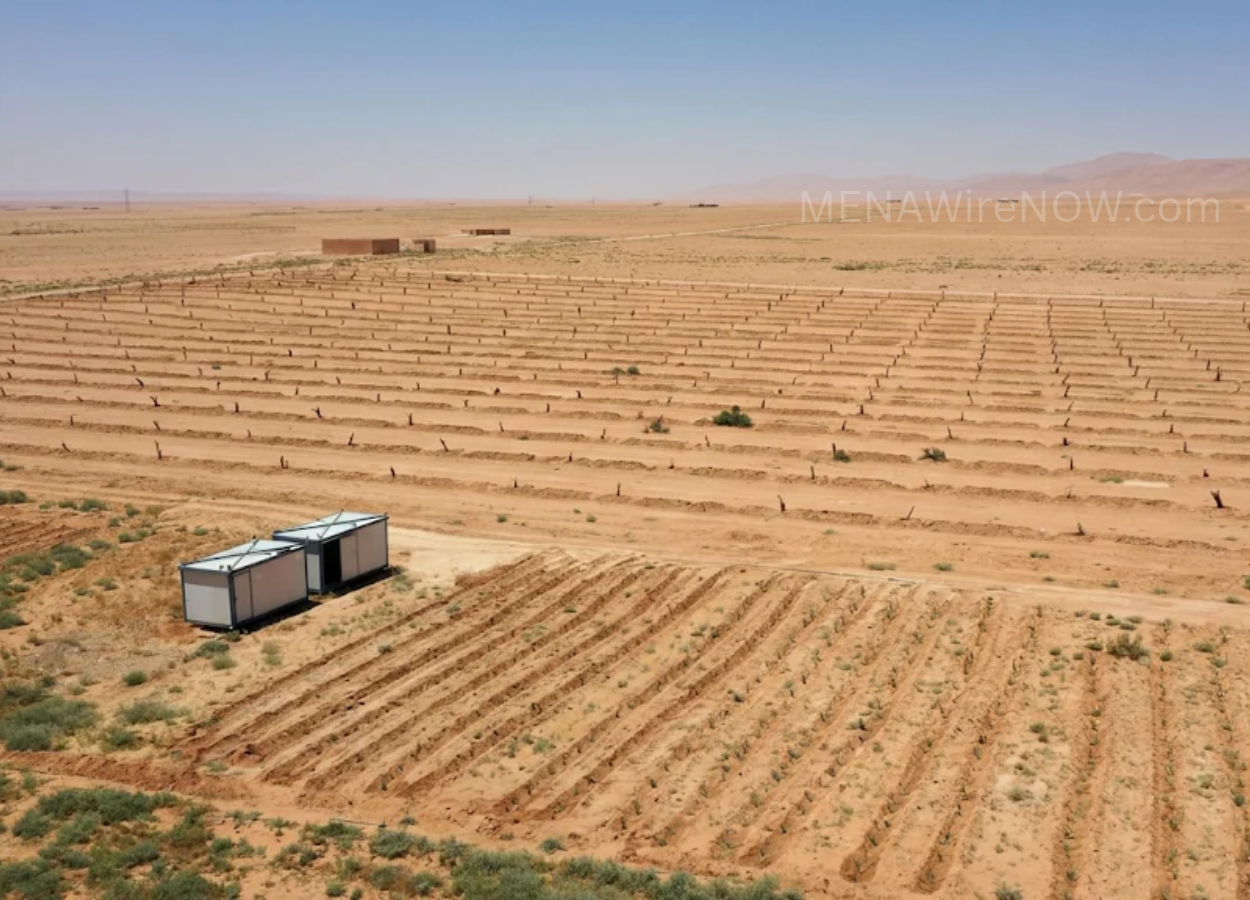
Syria’s Badia region, which is characterized by arid desert terrain, is about to get an innovative water control plan aimed at creating a whole irrigation system and reviving desert oases suffering the effects of the prolonged drought.
With the size of around 10.2 million hectares, almost 58 percent of the total land in Syria, the Badia region gets only 100-200 mm of rain per year.
So, it is losing rainfall volume, water levels of the aquifers are falling, and springs are drying up, which raises the salinity rate of soils, hurting the quality of fruit farms and minimizing pasture, therefore jeopardizing agriculture and livestock rearing.
Working alongside the General Authority for Water Resources, officials are focusing first on upgrading water delivery infrastructure. Work at the Palmyra Oasis involves repairing concrete canals, clearing waterways, and servicing control gates to supply around 1,060 hectares of agricultural land and support roughly 50,000 residents. Wells including L9, L9A, and Al-Sukhnah are also undergoing rehabilitation to boost water access.
During the 2025–2026 agricultural season, authorities cultivated and planted approximately 900,000 forage seedlings to rebuild degraded rangelands and expand protective green belts. Local cultivators are pitching in by tending orchards, pruning trees, and maintaining wells, with some turning to solar-powered pumps to lower energy costs.
Beyond immediate farm recovery, Al-Abdullah highlighted the value of processing local harvests—such as dates, molasses, jams, and oils—to raise household earnings. He urged stronger backing for agricultural cooperatives, accessible credit, and public-private-community partnerships. Long-term plans prioritize modern irrigation, rainwater and floodwater harvesting, stricter groundwater controls, and drought-tolerant native flora to curb desertification, soil erosion, and biodiversity loss across state-run and private oases in Homs, Deir Ezzor, Damascus countryside, Raqqa, and neighbouring districts.





No Comment! Be the first one.