






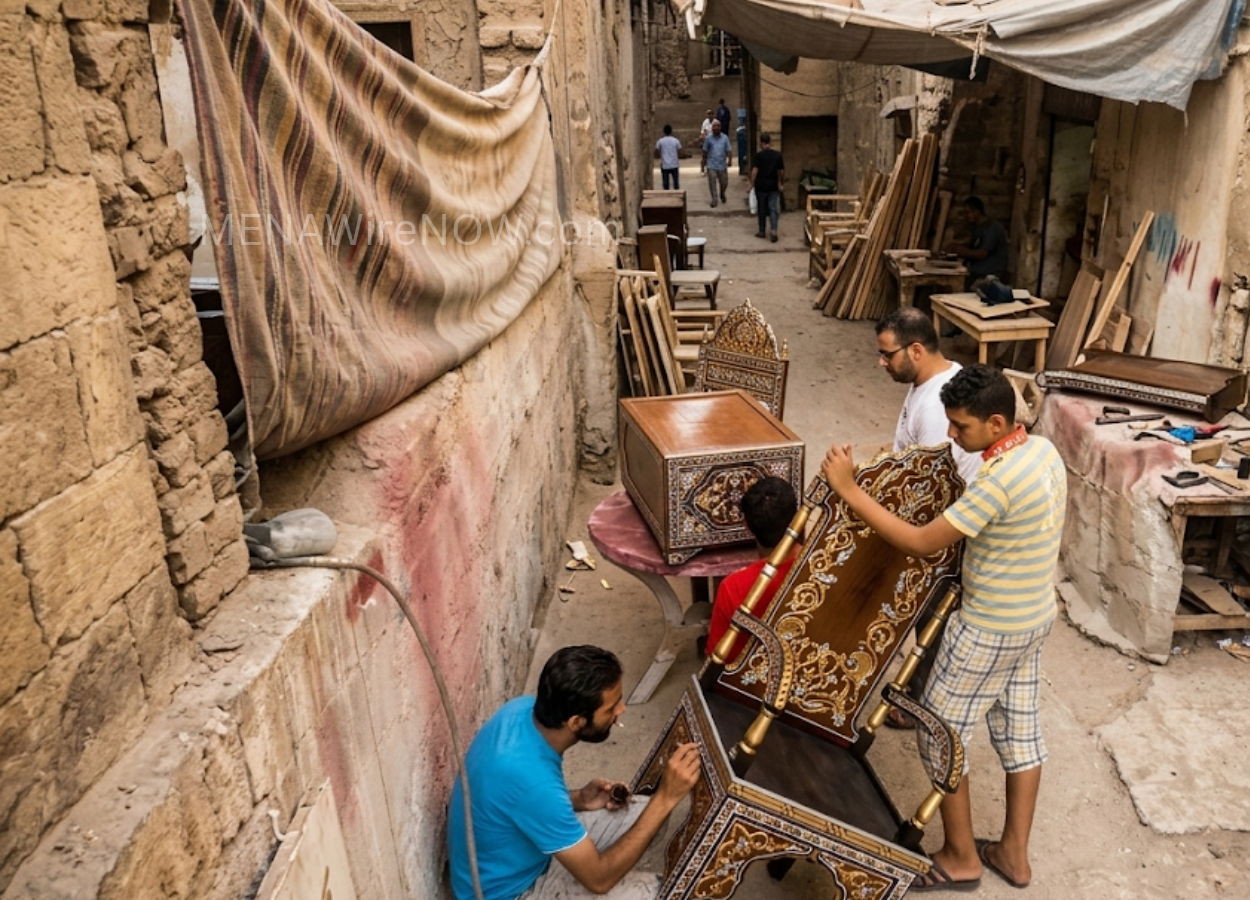
Furniture shops and factories in Damascus are increasing their efforts to go back to work and recover their former place in the local and regional markets. Although furniture making has deep roots in towns like Saqba, Arbeen, and Darayya, the craft has entered an important transitional stage, aimed at returning after years of interruptions.
The recovery of the industry comes after a challenging period characterized by the isolation of the economy and the forced migration of many craft workers and entrepreneurs. Even though the local workshops are willing to return to work, they are facing many difficulties, particularly strong shortages and speculation on the market with regards to such raw materials as medium-density fibreboard, which is crucial for the production of modern bedroom furniture and household manufacturing. Traders occasionally stockpile essential panels, artificially inflating prices and forcing workshop operators to delay major client orders while awaiting appropriate board thicknesses and colors.
Compounding these supply chain bottlenecks are soaring operational overheads, including inflated electricity tariffs, steep transportation fees, and expensive machinery maintenance. Additionally, local producers face intense competition from foreign imports—particularly Turkish furniture—which often floods regional markets with diverse designs and competitive pricing structures. Industry experts emphasize that overcoming these barriers requires integrating modern manufacturing infrastructure, such as computer numerical control (CNC) technology, to boost precision, accelerate assembly speeds, and minimize material waste.
Despite these formidable economic obstacles, industry leaders maintain that Syrian craftsmanship retains strong potential to re-enter lucrative regional trade networks, particularly in neighboring markets like Iraq, Jordan, Kuwait, Lebanon, Algeria, and Tunisia. Long-term revitalization relies heavily on stabilizing raw material supply chains, cutting production overheads, modernizing workshop equipment, and preserving the intricate heritage craftsmanship that once defined Syrian manufacturing excellence across the wider Middle East.






No Comment! Be the first one.