





ANKARA — Rival power centers in eastern and western Libya are accelerating parallel diplomatic, legislative, and security initiatives to expand cooperation with Türkiye, underscoring Ankara’s growing rapprochement across the divided North African nation.
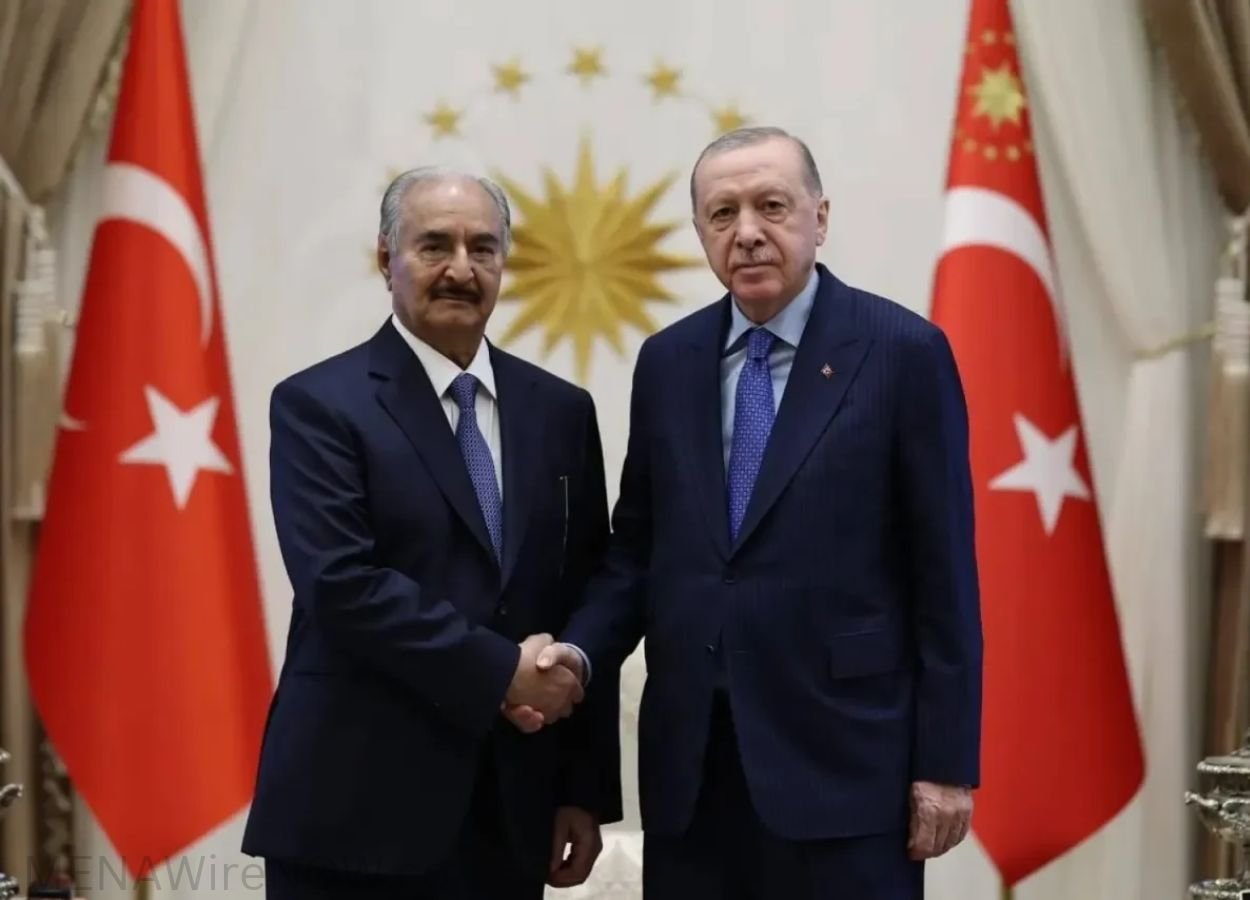
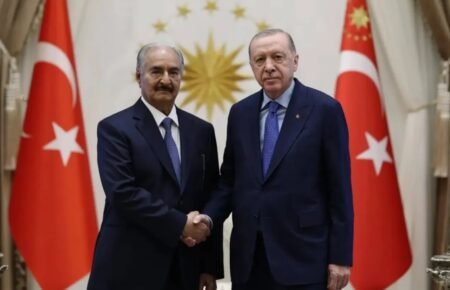
In Ankara on Wednesday, Turkish President Recep Tayyip Erdogan hosted Libyan National Army (LNA) commander Field Marshal Khalifa Haftar at the Presidential Complex, marking Haftar’s first official visit to Türkiye after years of rivalry in which Ankara backed the Tripoli administration against his forces. Prior to meeting Erdogan, Haftar held talks at the Foreign Ministry with Turkish Foreign Minister Hakan Fidan. The high-level delegation included Haftar’s sons—deputy commander Lt. Gen. Saddam Haftar, Chief of Staff Lt. Gen. Khaled Haftar, and Libya Development and Reconstruction Fund head Belqasim Haftar—alongside Turkish Defense Minister Yasar Guler, intelligence chief Ibrahim Kalin, and Chief of General Staff Selcuk Bayraktaroglu. While the LNA General Command did not disclose specific agreements, it noted that discussions examined regional and international developments alongside avenues for broader bilateral cooperation.
Haftar’s trip coincided with a major legislative shift regarding Eastern Mediterranean maritime boundaries. Libya’s eastern-based House of Representatives formally published decisions reversing its earlier opposition to the November 2019 maritime memorandum of understanding signed between Ankara and the former Government of National Accord led by Fayez al-Sarraj. On October 20, lawmakers voted unanimously to ratify the accord while repealing two 2020 resolutions that had rejected Turkish maritime and military pacts and called for severing ties with Ankara. Defining maritime jurisdictions through designated coordinates and an accompanying map, the agreement allows joint resource exploration across economic zones, mandates bilateral consultation before any third-party maritime boundary negotiations, and remains fiercely contested by Egypt, Greece, Cyprus, and the European Union, whereas Ankara views it as the legal cornerstone of Turkish-Libyan maritime ties.
Simultaneously, the Tripoli-based Government of National Unity (GNU), headed by Abdulhamid Dbeibah, is finalizing preparations to host the fourth Türkiye-Africa Partnership Summit on December 8–9. Expected to draw Erdogan and numerous African heads of state, the gathering is viewed by Tripoli as a key opportunity to strengthen its international diplomatic standing.
Joint organizational, security, and logistical planning is advancing alongside Turkish officials and the African Union Commission. Mustapha al-Manea, who heads the executive team overseeing Dbeibah’s strategic initiatives and sits on the summit’s higher committee, briefed an African Union Permanent Representatives subcommittee via videoconference on electronic accreditation, visa procedures, protocol, and security arrangements. Meanwhile, Acting Foreign Minister Taher al-Baour met Turkish Ambassador Guven Begec to coordinate summit preparations, and Acting Interior Minister Imad Trabelsi convened senior military and police commanders from Tripoli and neighboring districts to review delegation protection and transit security. Following up on the 2021 Istanbul summit, the Tripoli forum will review progress and map out future cooperation across trade, investment, energy, infrastructure, manufacturing, agriculture, education, technology, and regional peace.


No Comment! Be the first one.