






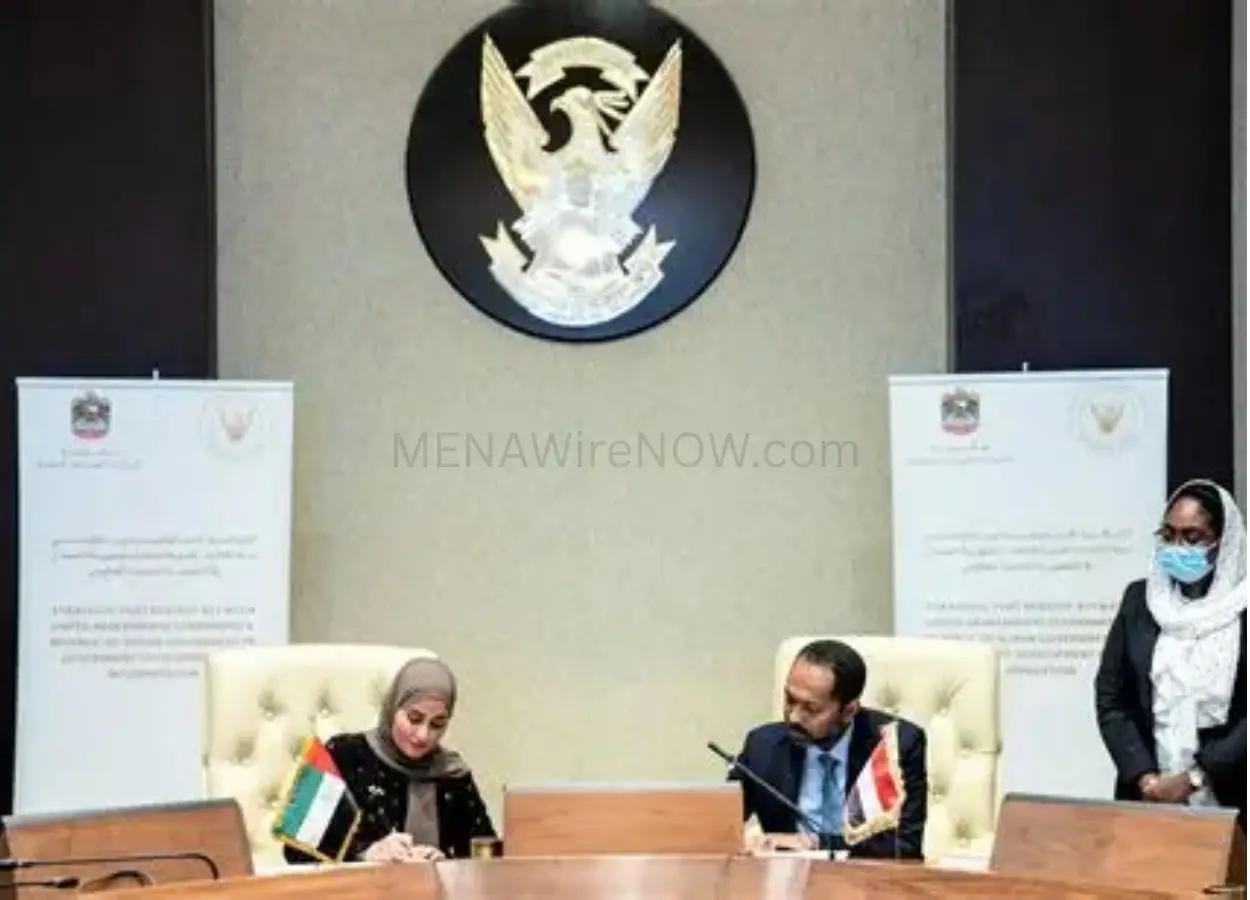
The Arab Forum on Strengthening Human Resource Capacities as Accelerators for Recovery and Reconstruction has called for a joint Arab initiative to develop human resources and strengthen institutional capabilities in Sudan between 2027 and 2030, with a focus on rebuilding expertise and supporting reforms across key sectors.
Table Of Content
The proposed programme would be implemented by Sudan’s Ministry of Human Resources and Social Welfare in partnership with specialised organisations affiliated with the League of Arab States. Each participating organisation would contribute according to its mandate and area of expertise.
The recommendation was included in the Khartoum Declaration, issued after the forum held in Sudan from October 13 to 15. The declaration was read by Dr Nasser Al-Hatlan Al-Qahtani, Director-General of the Arab Administrative Development Organization (ARADO), which organised the event in partnership with the Sudanese ministry.
The forum was also conducted in cooperation with Arab labour organisations, the General Secretariat of the League of Arab States, the Council of Arab Economic Unity and several specialised Arab federations. The gathering focused on the role of human capital and institutional readiness in supporting recovery and reconstruction efforts.
Annual training plan proposed for 2027
Alongside the four-year programme, the forum called for a joint action plan for 2027 centred on professional training, the exchange of expertise and train-the-trainer initiatives. These activities are intended to strengthen leadership, management and technical skills while contributing to institutional reform in sectors identified as priorities.
The proposed approach would enable institutions to develop their own training capabilities while sharing knowledge and experience among participating Arab organisations. The declaration places particular emphasis on building the skills required to improve public-sector performance and support the restoration and development of essential services.
The planned programme is expected to include specialised initiatives designed to address workforce and institutional needs in several areas. These include healthcare, technical education, vocational training, trade, industry, transport and infrastructure.
By targeting these sectors, the initiative aims to connect workforce development with the operational requirements of institutions responsible for delivering essential services and supporting economic activity. However, the announcement did not specify funding allocations, programme budgets or detailed implementation milestones.
Transport sector included in capacity-building priorities
The Khartoum Declaration also proposed a dedicated programme to rehabilitate Sudan’s transport sector by strengthening its human resources and institutional capabilities.
The initiative would focus on improving the skills of leaders and technical personnel working across different modes of transport. It would also promote higher standards of safety, service quality and operational efficiency.
The transport component forms part of the broader effort to ensure that workforce development supports practical institutional needs. Stronger technical expertise and management capabilities are important to the effective operation of transport systems and infrastructure, particularly where rehabilitation and service improvements are required.
The declaration sets out a framework of principles, strategic directions, recommendations and proposed initiatives, projects and programmes. Its recommendations call for coordinated action between Sudanese authorities and specialised Arab institutions rather than isolated training activities.
Regional cooperation to support reconstruction
The proposed 2027–2030 initiative places regional cooperation at the centre of Sudan’s human resource and institutional development agenda. Under the suggested arrangement, participating Arab organisations would contribute specialised knowledge and technical support within their respective fields.
The annual plan for 2027 would provide an initial framework for training and knowledge exchange, while the longer-term programme would establish a broader structure for capacity development and institutional reform.
The announcement did not provide a detailed timetable for the programme’s launch or confirm specific financial commitments from participating organisations. Further implementation details would be needed to establish how the recommendations will be translated into projects and activities.




No Comment! Be the first one.